


Old board games: the classics from back in the day that still work
13 oktober 2026 · Bijgewerkt 1 september 2026
Everyone has them in the attic. Boxes with worn corners, sticky tape down the side, a rulebook that someone once folded along the wrong crease. Old board games linger in houses, even when nobody has played them for years.
In this article we line up the classic board games most people mean when they think back to the old days. For each game you can read where it comes from, with the dates we have actually been able to check, and whether it still works at the table. Because that last part is not true of all of them, and it is fine to say so.
At the bottom there is also a short list of board games from the old days that we do not sell. They are part of the story, so we are not leaving them out.
Is there something here that is not available right now? Let us know and we will order it in for you. That way you will know straight away when it arrives.
What makes a board game a classic?
Not age alone. There are plenty of sixty-year-old games that nobody misses.
What the stayers have in common is that you can explain them in five minutes and that there is something in them you end up talking about. In Cluedo it is the notes on your sheet, in Scrabble the word you just cannot fit, in Stratego the moment your line of bombs is broken. Moments like that survive for decades.
Where most old-fashioned board games fall down is time. They take a long time, sometimes too long, and in some of them you are knocked out halfway while the rest play on. Modern games have improved on exactly that point. That does not make the old ones bad, but it does explain why an evening of Monopoly ends differently from how you remember it.
Old Dutch board games: what was on the table here
Three games that were in almost every cupboard in the Netherlands. For one of them, the Dutch connection can even be proven.
Ganzenbord (the Game of the Goose)
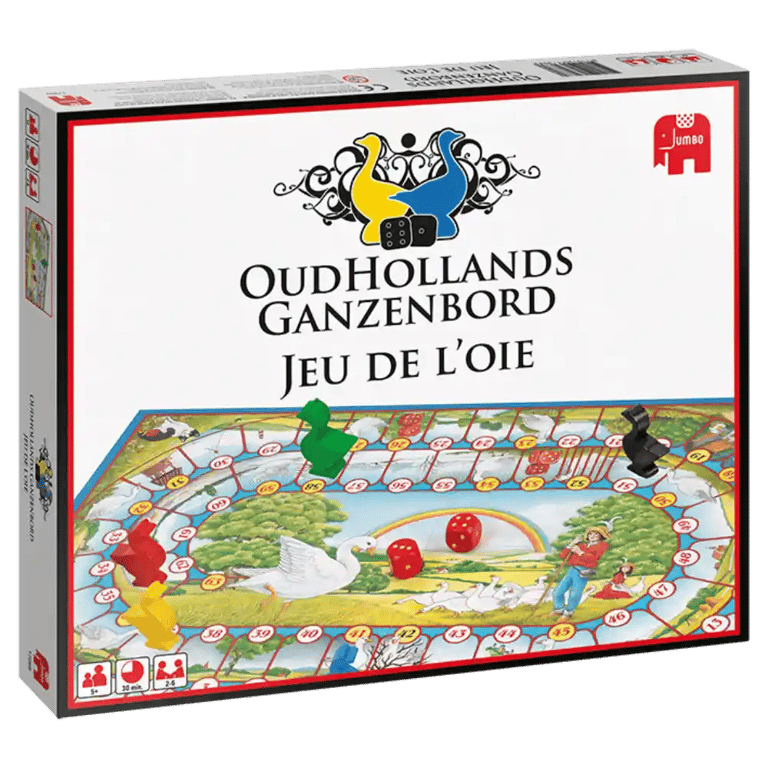
2 to 6 players, ages 5+, about 30 minutes.
Roll and move, with the well and the prison along the way to hold you up. Only the dice decide who wins, so there is nothing to choose. For a five-year-old that is exactly its strength: a little one does not lose to Dad here because Dad thinks better. Ganzenbord
Stratego
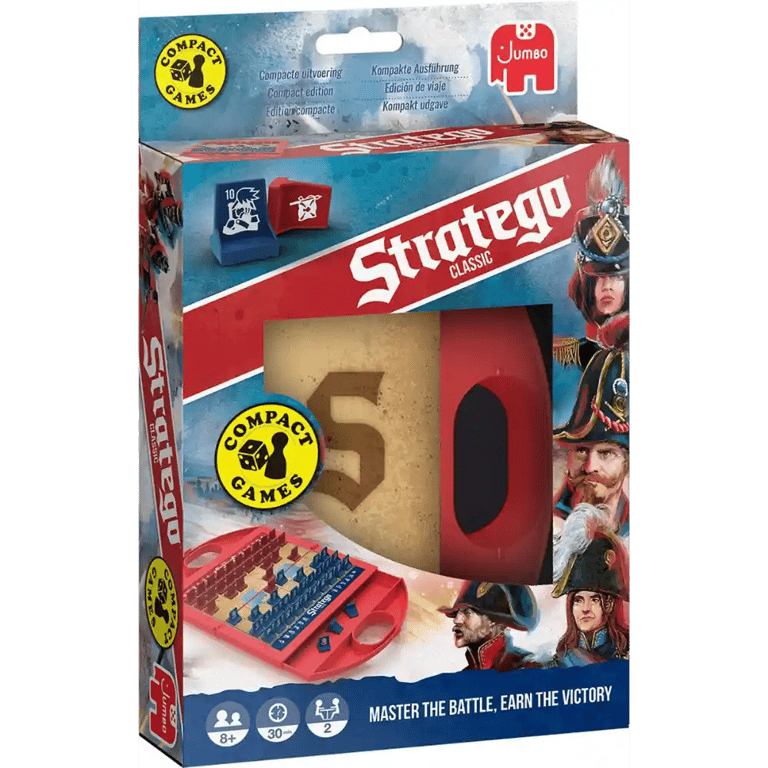
exactly 2 players, ages 8+, about 45 minutes.
Forty pieces per player, a ten-by-ten board, and one flag you have to find before the other player finds yours. The ranks wear Napoleonic insignia; the bombs lie wherever you dare to put them.
This is the game that truly deserves the label "old Dutch". The name Stratego was registered as a trademark in the Netherlands in 1942, in 1946 the game was licensed to Smeets en Schippers, and the trademark is now owned by Jumbo Games in the Netherlands. The game itself, by the way, was not invented in the Netherlands: it is a slightly modified version of the French L'Attaque from the early twentieth century.
Good to know: you will not find the big box from the old days with us.
Levensweg (The Game of Life)
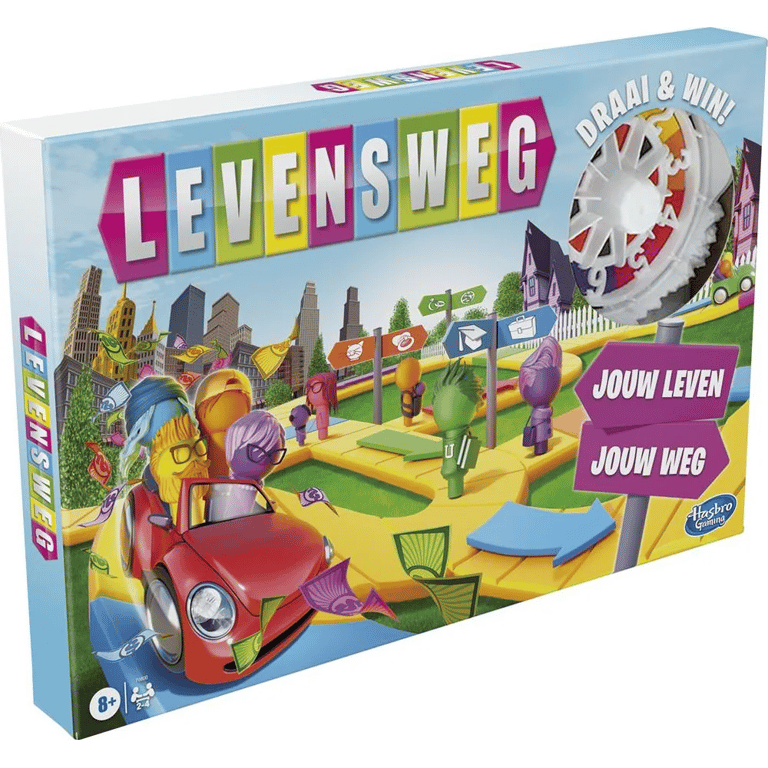
2 to 6 players, ages 8+, about 60 minutes.
Spin the wheel and see what life does to you. Study or go straight to work, marriage, children, a car full of pegs, and at the end whoever has the most money wins.
The original form is surprisingly old. In 1860 Milton Bradley made The Checkered Game of Life, the very first board game from his own company. The Dutch Levensweg comes from MB, which is now part of Hasbro. More than a century and a half later, children are still spinning that same wheel, and still grumbling when they get twins at the wrong moment.
Classic board games everyone knows
You do not need to explain these five to anyone. What is sometimes missing is where they come from.
Monopoly
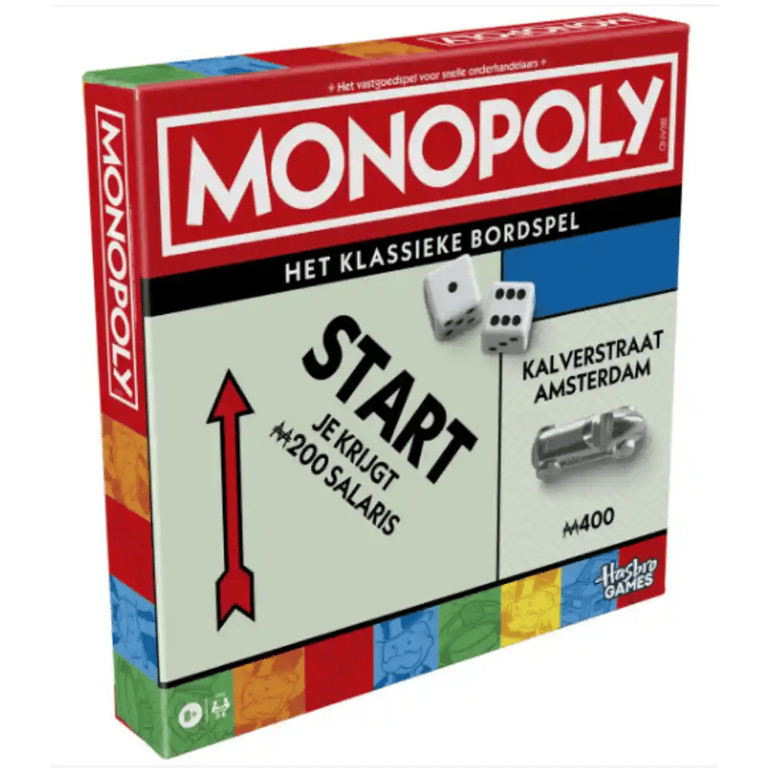
2 to 8 players, ages 8+, over an hour.
Buy streets, build houses, collect rent and wait until the rest are broke. Chance and Community Chest throw something in now and then, and the tax squares do the rest.
This is where the best story in this whole list lies. Monopoly is derived from The Landlord's Game, which Lizzie Magie made in the United States in 1903 to show that an economy in which wealth is shared works better than one in which monopolists own everything. Parker Brothers released Monopoly in 1935, and when it turned out that Charles Darrow was not its only inventor, the company bought the rights to Magie's patent for five hundred dollars. A game intended as a critique of monopolies became the best-known game in the world in which building a monopoly is exactly the point.
At the table it is less lovely. Whoever goes bankrupt early spends an hour watching. Get it for the nostalgia, not because it will be the best game in your cupboard. And please note: the box you find in shops today is a refreshed version, not the edition from back then.
Cluedo
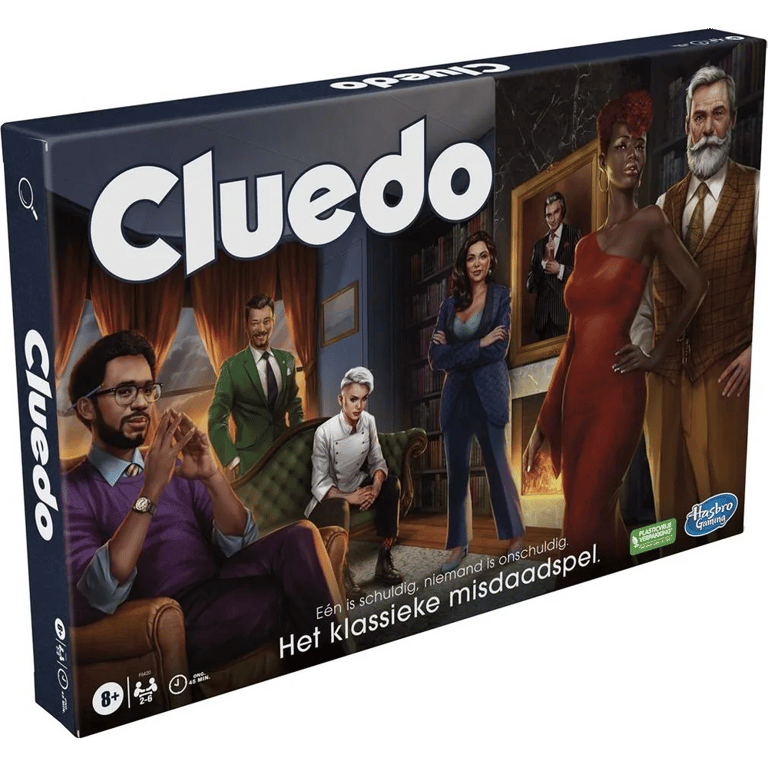
2 to 6 players, ages 8+, about 45 minutes.
A murder, nine rooms, six suspects and a sheet on which you make marks nobody else may see. You ask, you watch faces, and you hope you work out what is in the envelope at the right moment.
Anthony E. Pratt came up with it in England in 1943; Waddingtons first released it in 1949. In North America it is called Clue. Of all the games in this list, Cluedo is the one that has held up best, because the deduction on your sheet is still real deduction. Whoever takes notes systematically wins more often. That felt good back then and it still does.
Scrabble
2 to 4 players, ages 10+, over an hour.
Seven letters on your rack, a fifteen-by-fifteen board and the eternal question of whether that word is in the dictionary or not.
Alfred Mosher Butts, an American architect, came up with it in 1931. Almost a century later Scrabble is still the game where someone at the table gets up to fetch the big Van Dale dictionary. Expect well over an hour, and at least one game in which you get seven vowels and the other player puts a Q on a triple word score.
Risk
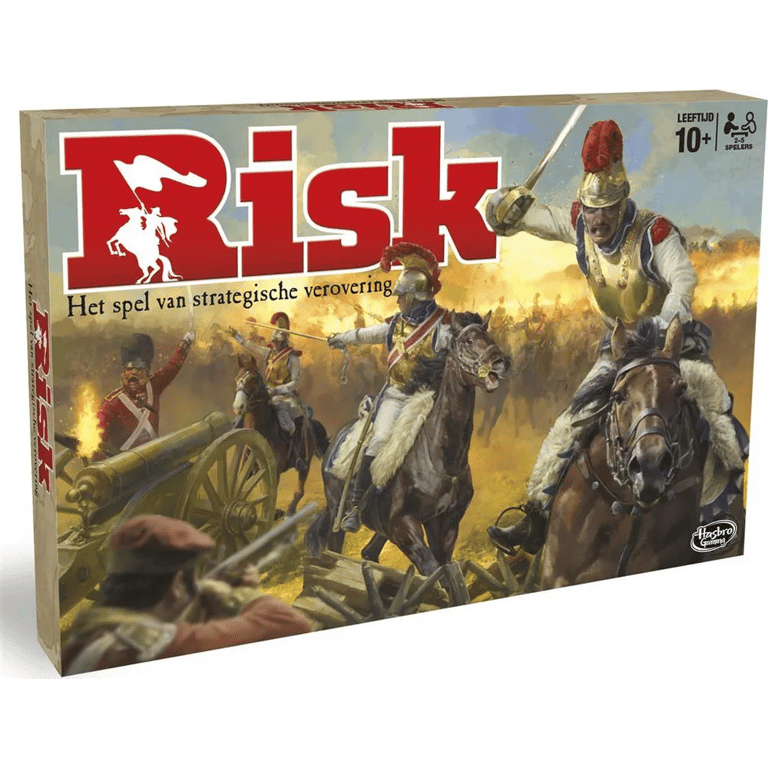
2 to 6 players, ages 10+, over an hour.
Forty-two territories, six continents and little armies you push across the world map. You attack with dice, and along the way you may form alliances and break them again, which at most tables is the real game.
Grabbing Australia and waiting is still the classic opening, and it is still annoying for everyone else. Be warned: a game of Risk easily runs long, and just as in Monopoly someone can be out of the running well before the end.
Zeeslag (Battleship)
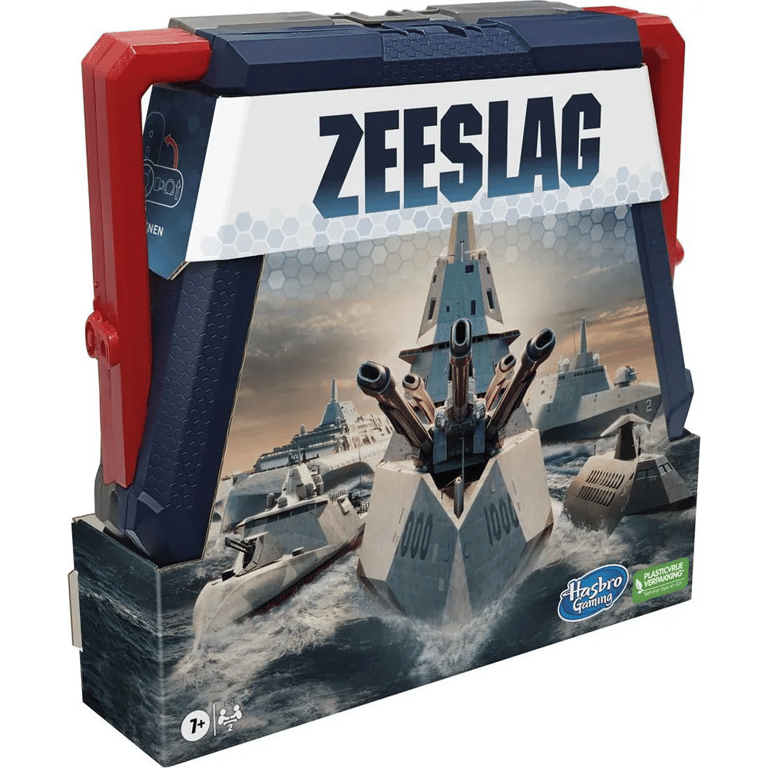
exactly 2 players, ages 8+, about 30 minutes.
B4. Miss. D7. Hit. Two grids, two fleets, and that is all you need.
The most surprising fact in this article: this is not a game from the eighties. Battleship became known worldwide as a pen-and-paper game and dates from the First World War. The plastic box with the clicking pegs came much later. Children still play it just as fiercely as their great-grandparents did in the trenches.
Classics that were half toy
Some of the best-known old board games were, strictly speaking, not games but machines. You built something on the table, set it in motion and watched what happened. Nobody noticed that there was not much to the rules.
Muizenval (Mousetrap)
2 to 4 players.
Ideal Toy Company released it in 1963, and it was one of the first mass-produced board games with a three-dimensional construction in the middle of the board. First you build a mousetrap together in the style of a Rube Goldberg machine, with a bucket, a bathtub, a marble and a ladder that set each other in motion. Only once the thing is standing do you turn against each other.
The idea came from Marvin Glass and designer Gordon Barlow, who were granted a US patent on it in 1967. The 1963 edition was worked out by Hank Kramer of Ideal, and it left the players almost nothing to decide: you roll and you move, just like in Ganzenbord above. Only in 1975 did Sid Sackson redesign the board around it and add cheese tokens, with which you could steer an opponent towards the trap. From that moment on there was something to choose.
Why it sticks, everyone who has ever played it knows: nobody remembers anything about the rules, and everybody remembers everything about the marble rolling off the ladder. In the version Hasbro released in the 2010s, by the way, you are no longer out when the cage falls; you just lose cheese.
Marvin Glass made two more in the same spirit: Crazy Clock in 1964 and Fish Bait in 1965. Both have been forgotten, and that says something. One machine on the table is a memory, three is a gimmick.
We do not sell Mousetrap, in any edition. Further down we explain why a few titles like this are missing from our range.
Board games from the 1980s
Classics and reprints are also the titles most often on sale, so take a quick look there before you order anything. Anyone searching for 1980s board games almost always ends up with these two. They were on the table in half the Netherlands during that decade, although one of them is actually older.
Trivial Pursuit
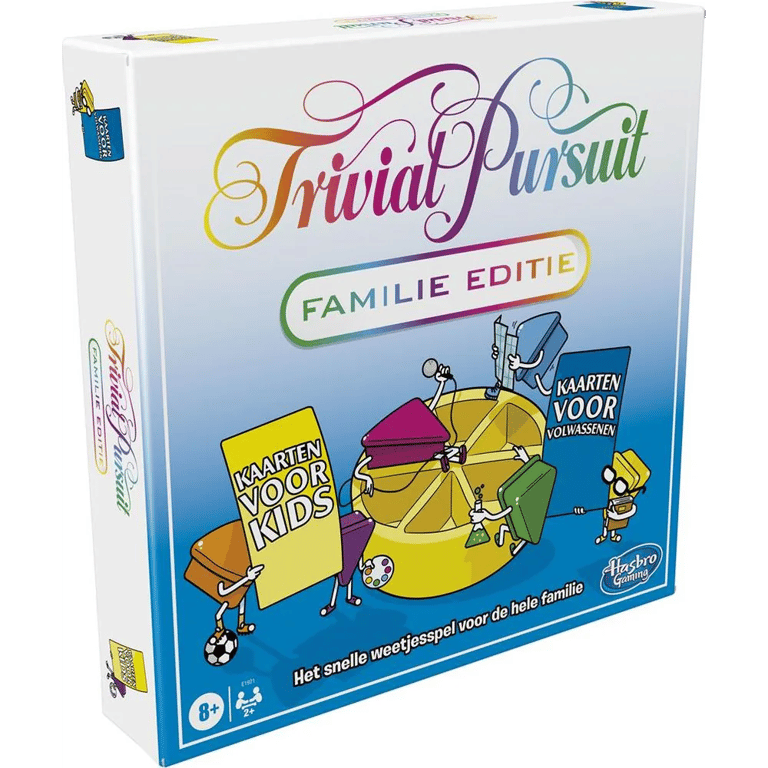
2 to 4 players, ages 13+, about 45 minutes.
Collect pie wedges by answering questions correctly, in six categories, and then head back to the middle for the final question your opponents get to choose. That last part is meaner than it sounds.
The origin story is almost too good: Chris Haney and Scott Abbott, a photo editor and a sports editor respectively, came up with it on 15 December 1979 in Montreal. The design took three quarters of an hour and was written on the back of a cigarette packet. In 1980 they collected the questions, and in 1981 the game came out in Canada.
Good to know: there is also a Family Edition, with separate cards for children and adults. It is a nicer game for the table than the original, but it is not the box you remember.
Mastermind
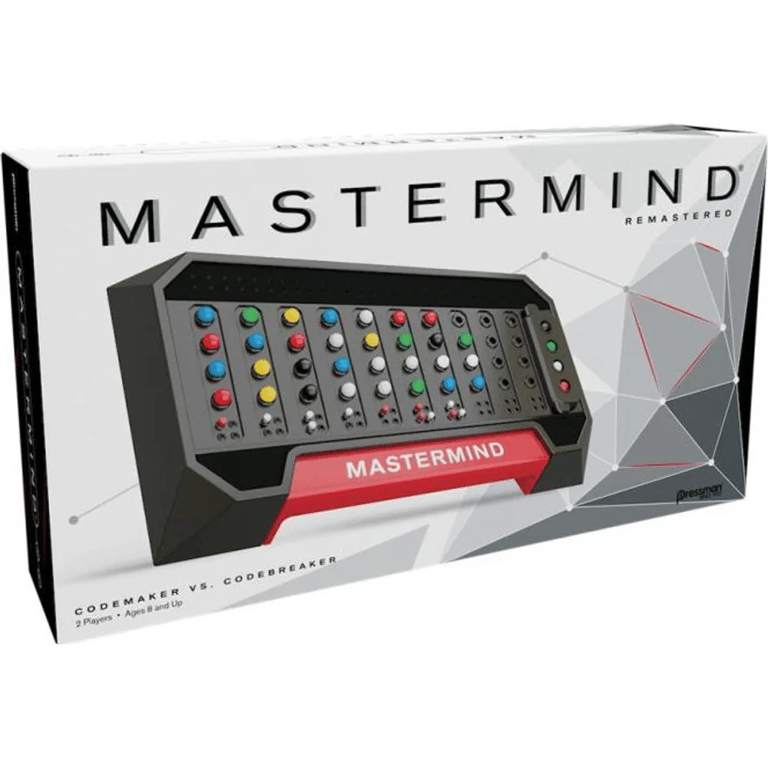
exactly 2 players, ages 8+, about 20 minutes.
One player sets a secret code with coloured pegs, the other guesses and after each attempt is told how many are in the right place and how many are the right colour. That is all the rules there are.
For the record: this is not an eighties game, even though it was in every cupboard back then. Mordecai Meirowitz, an Israeli postmaster, came up with Mastermind in 1970. The big toy companies did not want it, after which Invicta Plastics from near Leicester bought all the rights and released it in 1971 and 1972. It goes back to an older pen-and-paper game, Bulls and Cows, which may date back another hundred years.
Twenty minutes, two players, and still the best game to play on a waiting-room chair somewhere.
Board games from the 1990s: the decade that changed everything
For 1990s board games there is really only one answer, and that is Catan. Klaus Teuber released it in 1995 with Kosmos in Germany, and it became one of the first German games to break through outside Europe as well. By 2020 the count stood at more than 32 million boxes sold in forty languages.
What changed in that decade is exactly what you miss in Monopoly and Risk above: nobody is knocked out, a game takes about an hour, and the winner is decided by what you build and trade, not by who survives longest. Everything that came after builds on that. You can read which games we enjoy most today in our top 10 board games.
Old-fashioned board games you will not find with us
To be fair: there are a few board games from the old days that we do not sell.
Mousetrap above is one of them. Mens erger je niet (the Dutch take on Ludo) is not in our range either, and neither is a sjoelbak, the Dutch table shuffleboard. That is no coincidence: we are a games shop for people who play often, and titles like these are usually already on the shelf at the supermarket or the toy shop round the corner.
Think that is a shame? Do let us know. If enough people ask for them, we will take another look.
Which classic will you bring home?
If you want one game from the old days back in the cupboard and children will be playing it, go for Ganzenbord for the youngest and Cluedo once they are about eight. Of this whole list, Cluedo is the game that holds up best against everything made since.
If you often play as a pair, Stratego and Mastermind are the better choices. Both are for exactly two players, and both are still a real game rather than a memory.
And if you are looking for something the whole birthday party can join in with, Trivial Pursuit is still hard to beat, especially in the family version where the children get their own questions. Would you rather have something from today? Take a look at our fun board games or the family games.