


Sinterklaas games for kids: eight games by age
13 oktober 2026 · Bijgewerkt 5 oktober 2026
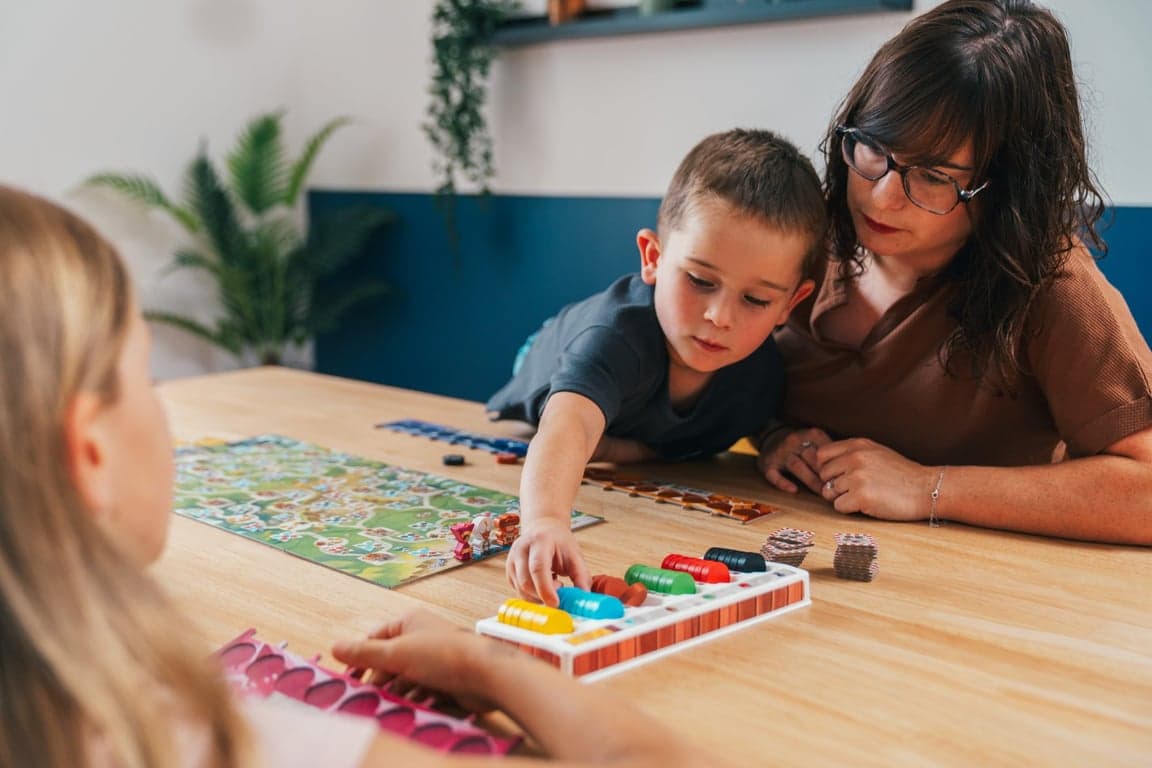
A game in the shoe has something a chocolate letter does not: it is still there the next morning. And the day after that. If you are looking for Sinterklaas games for kids, what you mainly want to know is whether a game suits your child's age, and whether it fits in a shoe or is better pulled out of the sack on Sinterklaas Eve.
That is why this list is sorted by age. First three games for ages 6 and up, then three for children aged 8 and up. Those six are short, quick to explain and most of them fit in a shoe. At the bottom are two bigger boxes for Sinterklaas Eve itself, for when the game gets to be the main present.
Which game suits which age?
- Ages 6+, small: Happy Salmon, Beverbende, Stomp Stomp Chomp
- Ages 8+, small: Flip 7, Regenwormen (published in English as Pickomino), Scout
- Bigger present for Sinterklaas Eve: Splendor Kids (ages 6+), Hues and Cues (ages 8+)
Looking for more small boxes? You will find them all together in our shoe gifts category.
Happy Salmon: ages 6+, done within ten minutes
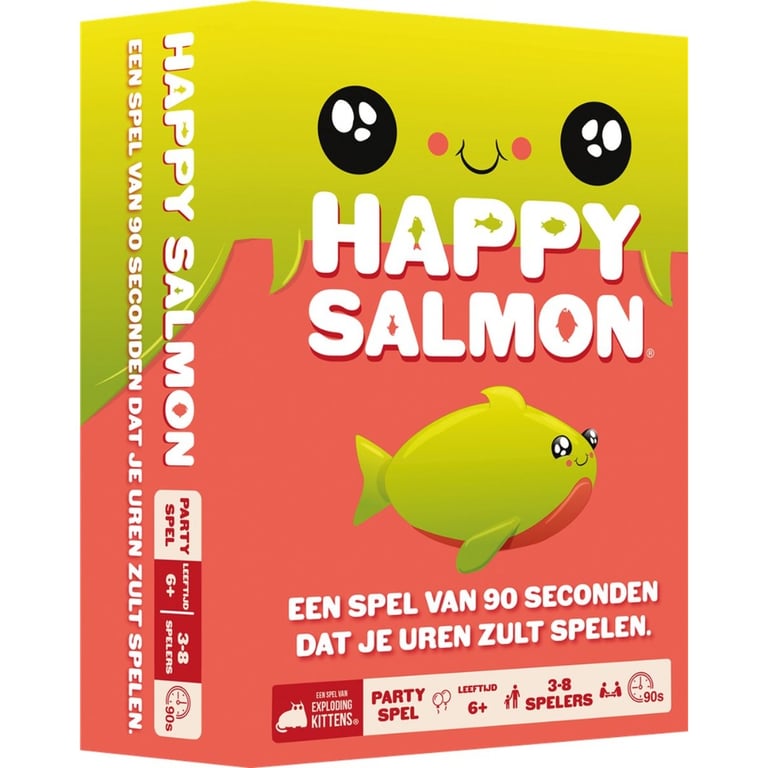
Everyone plays at the same time, and you notice that straight away. You look at the top card of your pile and call out what is on it. If someone else has the same card, the two of you do the action together: a high five, a fist bump, swapping places or the Happy Salmon move the game is named after. The first player to get through their cards wins.
There is no counting involved and not really any thinking either; it is all about being quick and shouting loudly. You do need at least three players, and up to eight can join in. So do not put it in the shoe of an only child who will be sitting alone at breakfast the next morning, but it is perfect for a family where everyone can join in for a moment in the evening.
Beverbende: ages 6+, for children who love remembering things
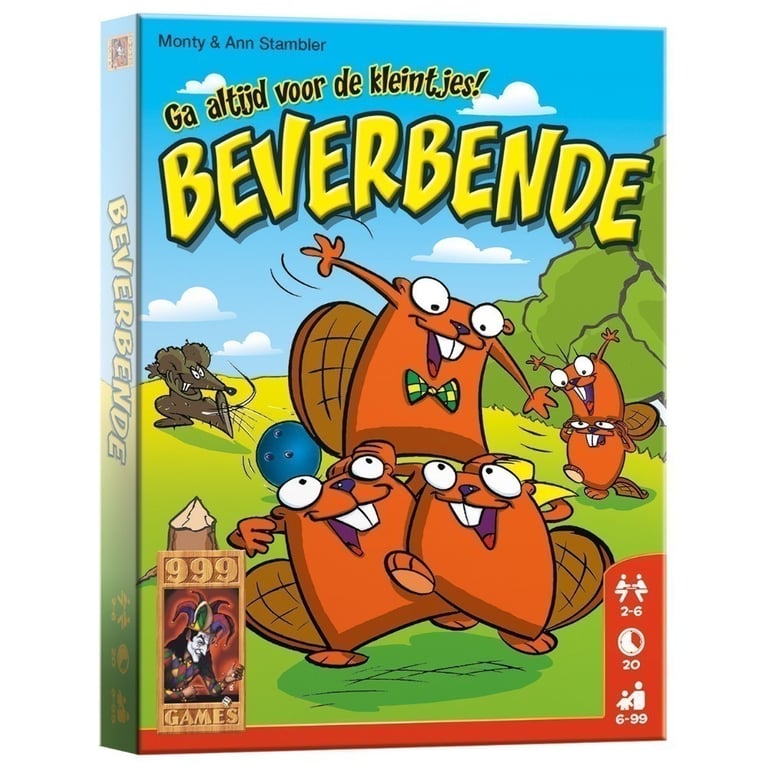
Four cards lie face down on the table in front of you. You may look at two of them at the start; the other two remain a guess. Every card shows penalty points, and you want as few as possible. On your turn you draw a card and perhaps swap it with one of your face-down cards, or you play an action card to go and meddle with someone else's.
Young children are often surprisingly good at this, because they remember where that zero was better than their parents do. A round is short, so you can easily play a few in a row. The game has been around since 1995 (internationally it is called Rat-a-Tat Cat) and has been sitting in many families' cupboards for years.
Stomp Stomp Chomp: ages 6+, for children who cannot sit still
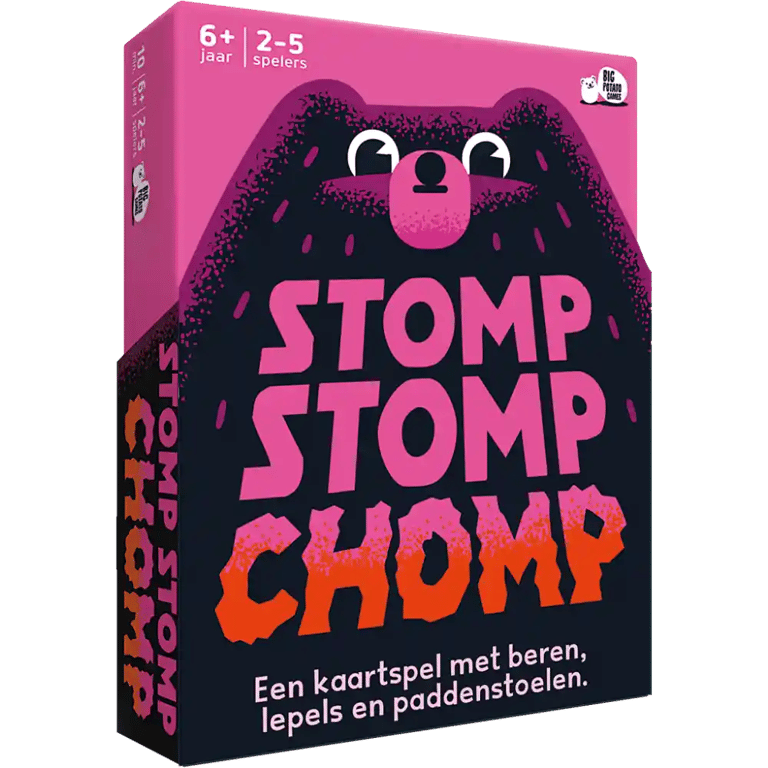
Before the first card is turned over, the whole table shouts "STOMP STOMP CHOMP" together. Then you collect mushrooms until the third bear appears. At that point, whoever draws the bear has to grab a spoon as fast as they can, while the rest try to get their mushrooms to safety with the dice just in time.
The game is new this year and is all about nerve and speed. A game takes about ten minutes and you play it with two to five people. Do not expect a quiet evening.
Flip 7: ages 8+, dare you take another card?
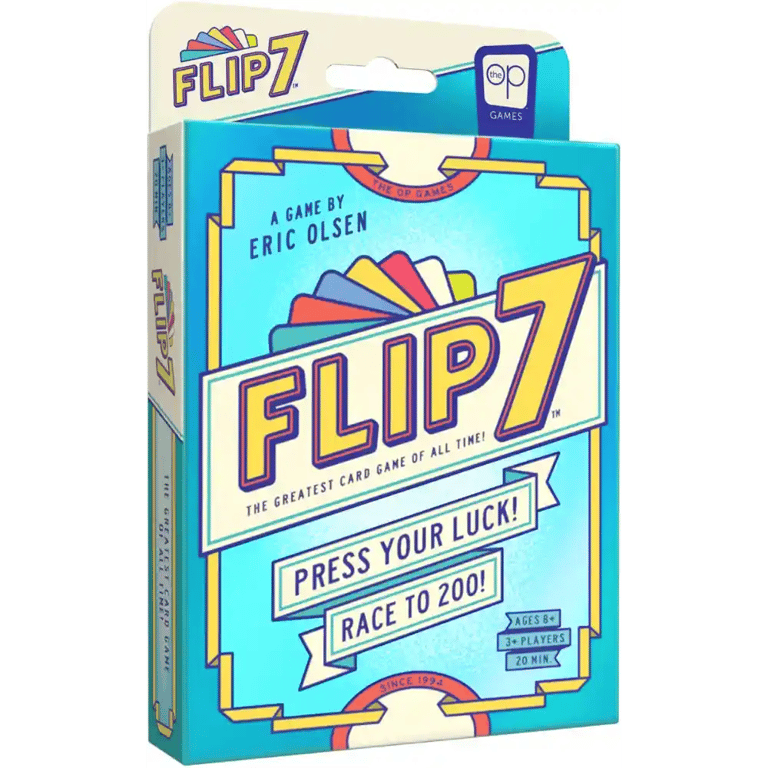
There is only one question in Flip 7, and it keeps coming back: do you take another card or do you stop? Most cards have a number. If you draw a number you already had, you lose all your points for that round. The first to reach 200 points wins.
Eight-year-olds get it after one round, and after that there is plenty of loud cheering and groaning. The great thing is that up to twelve people can play, so on Sinterklaas Eve even Grandad can take a card. This is the compact version, which fits in a shoe without any trouble. A few action cards have an English word on them, such as "Freeze", but you can explain that in one sentence.
Regenwormen: ages 8+, rolling dice with a chicken in the starring role
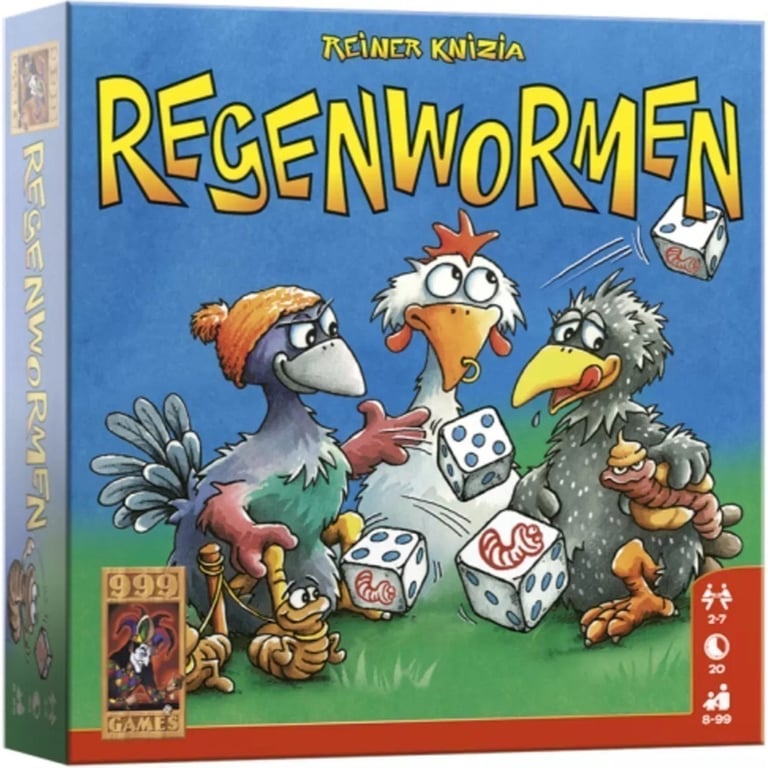
Eight dice, with a worm where the six should be. You roll, set aside all the dice of one particular value and roll on with the rest. Each time it has to be a value you did not have yet. Once you are on at least 21 and have rolled at least one worm, you may take a tile from the middle.
Get too greedy and find you cannot set anything aside, and you lose your top tile. Children learn to add up and weigh risks along the way, without it ever feeling like homework. The game is by Reiner Knizia and you play it with two to seven people. Want to read through the rules beforehand? We have written out the rules of Regenwormen step by step.
Scout: ages 8+, the little card game with a twist
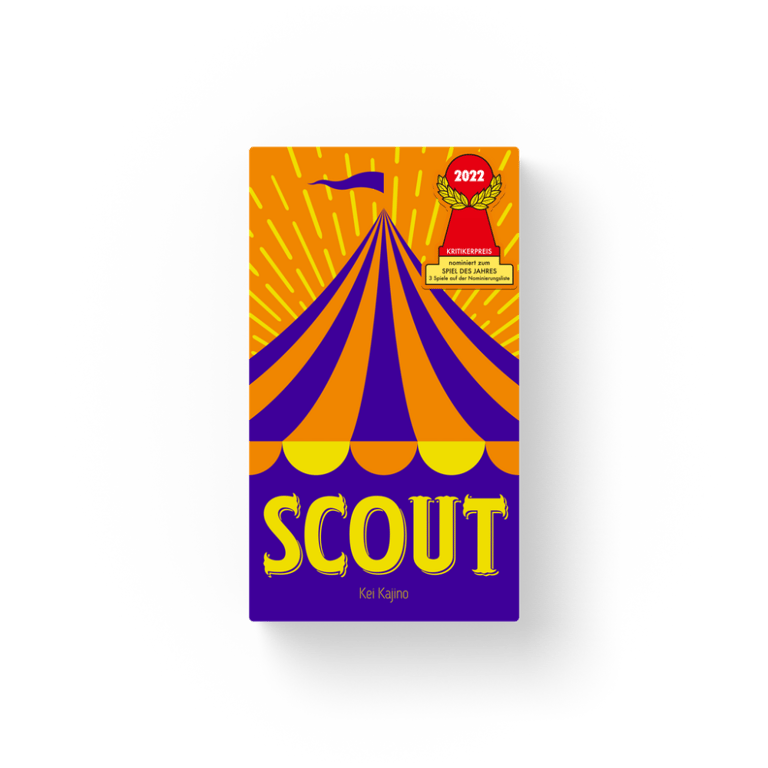
In most card games, you sort your hand first. In Scout you are not allowed to: your cards stay in the order you were dealt them. Every card has two numbers, and on your turn you play a run of matching or consecutive numbers that beats what is already on the table. If you cannot, you take a card from the table and slide it somewhere into your hand, hoping it will make a nice run later on.
The box says ages 8 and up. For a child who has only just turned 8, it can be a bit of a puzzle; from around nine or ten it usually goes very smoothly. The cards only show numbers, so the English edition is no problem at the table. Adults love playing it just as much, by the way: on BoardGameGeek, Scout is in the top 20 family games.
Splendor Kids: ages 6+, the bigger present
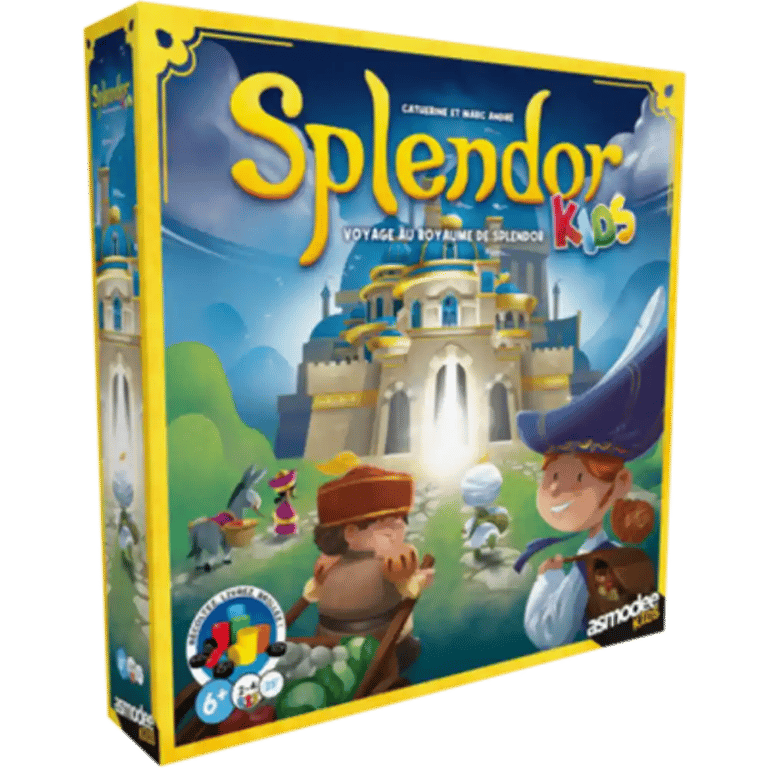
Splendor is often a familiar name to parents. This children's version comes from the same designer, Marc André, and has a story of its own. You travel through the kingdom with your ponies to bring food to villages, towns and finally the queen's palace. Along the way you collect resources and think about your next move.
This is not a game for the shoe, but it is a box that makes an impression on Sinterklaas Eve: wooden components, a game board you lay out differently every time and an extra variant for when your child knows the game well. You play it with two to four people in about half an hour.
Hues and Cues: ages 8+, for the whole family
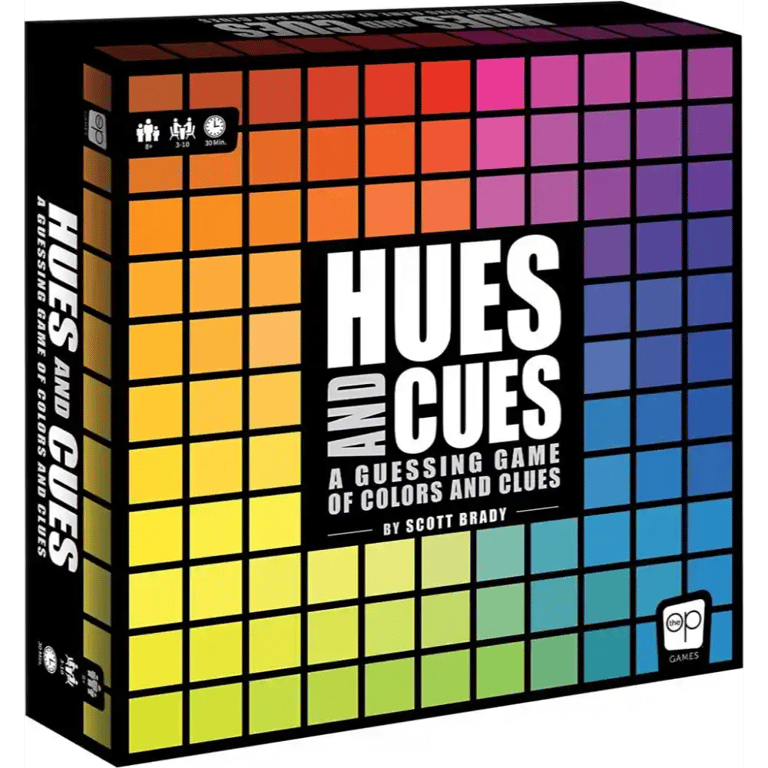
The board is covered in hundreds of coloured squares. One player secretly picks one and gives a one-word clue, such as "banana" or "sea". The others put a pawn on the square they think is meant. Then comes a second clue of two words, and that is when you find out how differently everyone sees colour.
Children do not need to know any tactics to join in, and that makes it a lovely Sinterklaas Eve present for a family. Three to ten players can sit at the table. Of all the games on this list, this is the most a group game, so it only really works when more people pull up a chair that evening.
One more tip for the shoe
Children often play a shoe gift in the morning for a few minutes, with their coat already on. So for the shoe, choose a game that can be explained in a couple of minutes and does not require your child to read a rulebook first. Add a note with the most important rule in one sentence, in rhyme if you feel like it. Looking for ideas for slightly older children or the whole family? Then also take a look at our top 10 Sinterklaas games. And if you want to move straight on to the Christmas holidays after 5 December, you will find bigger games for those days off in our piece on Christmas games for kids.