


Solo journaling games: what they are and which ones you can play
13 oktober 2026

Solo journaling games: what they are and which ones you can play
You do not have a gaming group or a table full of cards and tokens, and yet you fancy disappearing into a story for an evening. That is exactly the gap solo journaling games fill. The genre is growing fast, especially through TikTok, Reddit and BoardGameGeek, and many Dutch players come across the term for the first time without anyone explaining it properly.
That is where this article comes in. First we explain exactly what solo journaling games are and how you play them. Then we list the best-known titles, so you get an idea of how broad the genre is. We highlight Song of the Scryptwyrm separately, because that is the title you can currently get from us.
One thing up front: most of these games are in English and come from the small, self-publishing corner of the hobby. So do not count on a Dutch box in the shop for every title we mention.
What are solo journaling games?
A solo journaling game is a game you play on your own by writing. “Journaling” here literally means keeping a diary or logbook while you play: you read a prompt, you roll a die or draw a card to decide what happens, and then you write down what your character does, thinks or experiences. What you are left with at the end is not a score, but a story you wrote yourself.
The genre belongs to the wider family of solo roleplaying games. While an ordinary board game sometimes has a solo mode (a dummy player or a points target to beat), a journaling game is not about winning. There is usually no number you have to reach. The game is over when the story reaches an end.
The difference from a full solo roleplaying game is also worth knowing. A solo D&D evening often uses a complete rulebook with combat and skill checks. Journaling games are generally more accessible, built for one player from start to finish, and lean more on writing than on maths. The line is not always sharp: a title like Ironsworn sits right in between, and we will come back to that shortly.
How does a solo journaling game work?
The set-up is similar for most titles. First you create a character or starting situation using a few prompts. Then you go through a ‘loop’: you get a prompt, you consult a die or card to see which specific answer applies, and you write down your character's response before you carry on.
Where the games differ is in how much support they give you. Some give you almost a whole sentence that you only need to complete. Others give a short oracle answer along the lines of “yes, but…” and leave it to you to turn that into a scene. That oracle is nothing complicated: it is a table or a small set of cards that you consult to answer questions about what happens next.
A session often lasts fifteen to thirty minutes, just right for an evening on the sofa. Even so, it is a broad genre. Some titles are finished in a few minutes, others are campaigns you spin out over dozens of evenings. So do not assume everything is short and light.
What do you need to get started?
Not much. In almost every case you need the rulebook or the zine itself, something to write in (a notebook, a blank sheet of A4 or just a document on your laptop), a pen, and the dice or cards the game calls for.
That last part differs per title, and it is a nice way to get to know the genre straight away. A good share of the games run on an ordinary deck of playing cards (Colostle, Alone Among the Stars, Solitaria, Apothecaria and The Wretched). Others use separate dice, such as Notorious and Tinyoji. Others still rely on a tarot deck, such as Deify, or on a set of cards made specially for the game. The Wretched adds something special on top of that: a wobbly block tower, like in Jenga, that builds up the tension.

You do not need a board, pawns or a second player. For many people, that low barrier to entry is exactly the appeal.
Who are solo journaling games for?
The genre suits anyone who loves stories but cannot always get a group together. You do not need a regular games night or a table that is taken up for an hour. You grab the booklet, your pen and your dice, and you are playing within a minute.
It helps if you enjoy writing, although it does not have to be pretty or flawless. Nobody is reading over your shoulder. Some players use the genre as a moment of calm after a busy day, others as a way to put their own fantasy world on paper. If you love roleplaying games but miss having a group, this is a natural next step.
The best-known solo journaling games at a glance
Below are the titles that come up in almost every overview of the genre. They differ greatly in tone and length, so see this as an introduction, not a ranking.
Song of the Scryptwyrm (Almost Bedtime Theater) is a narrative mystery game in which you solve a theft in an infinite library. This is the title we have in stock; we highlight it further down, and there is an in-depth review of Song of the Scryptwyrm if you want to dive deeper straight away.
Thousand Year Old Vampire (Tim Hutchings) has you write the diary of a centuries-old vampire who has to sacrifice old memories to make new ones. It is often named as the starting point of the genre and won several ENNIE Awards.
The Wretched (Chris Bissette, published by Loot the Room) is set on an abandoned spaceship after an alien attack. The block tower that serves as a tension meter makes every turn literally more wobbly.
Ironsworn and its science fiction follow-up Ironsworn: Starforged (Shawn Tomkin) are free, complete rulebooks. They are built for solo, co-op and guided play, which puts them closer to a full solo roleplaying game than to a slim zine.
Alone Among the Stars (Takuma Okada) is a calm game about a lone space traveller discovering uninhabited worlds. Sessions often last only a few minutes, which makes it a popular way in.
Apothecaria (Anna Blackwell) casts you as a village witch who brews remedies for her fellow villagers. The atmosphere is often compared with Stardew Valley, with a slow-burning mystery in the background.
Notorious (Jason Price) is a bounty hunter story in a science fiction galaxy, played with two dice. It offers a quick play mode and a slower story mode for those who mainly want to write.
The Magus (and the later edition The Magus & The Oracle, by momatoes) follows the rise and fall of a sorcerer. It involves more numbers and record-keeping than most titles, so it feels a bit meatier.
Colostle (Nich Angell, Draconeer Games) has you explore a world-sized castle with a deck of playing cards. Of all the titles here, this one feels most like a classic adventure roleplaying game.
Solitaria (studio Sparuh) is a cosy adventure among floating islands, with a thick rulebook and a built-in oracle. You can play it solo or with friends.
Tinyoji (also by Sparuh) is about tiny creatures who tend gardens and help their neighbours. It is deliberately short and gentle, with sessions of a quarter of an hour.
Deify (Allyson D’Antonio) has you follow a god from birth to death with a tarot deck. The game ends as soon as you draw The World card.
In the spotlight: Song of the Scryptwyrm
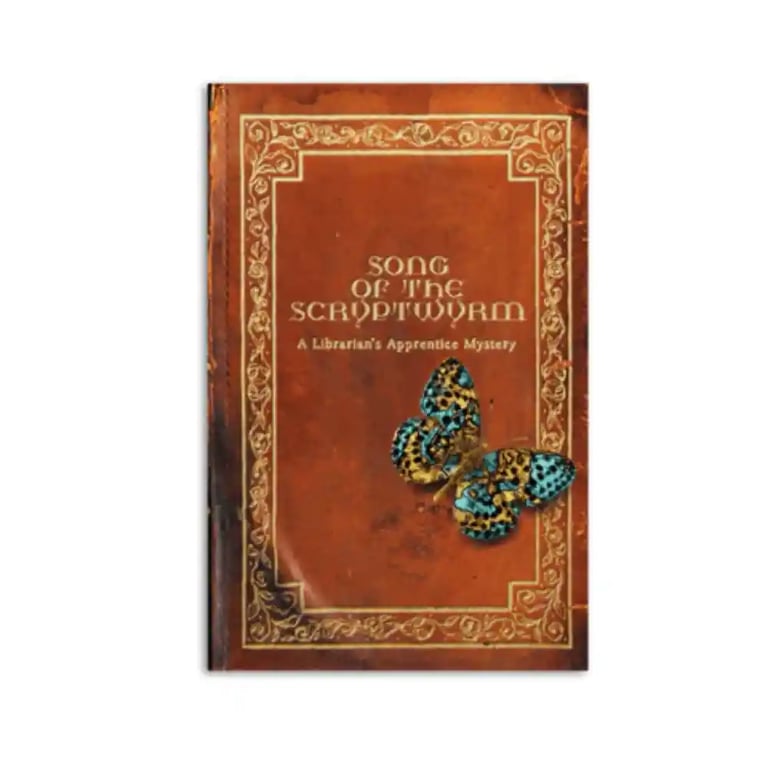
Of all the titles above, there is one you can get from us today: Song of the Scryptwyrm by studio Almost Bedtime Theater. It gives you a narrative mystery game in which you gather clues about suspects, places and objects to solve a theft in the infinite Great Library.
The game is an adaptation of the Hints & Hijinx system by Pandion Games. You can play it on its own, or as a follow-up to the earlier The Librarian’s Apprentice by the same makers, in which you continue along the same path towards becoming a librarian. In 2026, Song of the Scryptwyrm was nominated for the ENNIE Award for best solo game. That is a nomination, not a win, but it does say something about how the game has been received in the hobby.
Keep a few practical things in mind before you order. The game is in English and does not include dice or cards itself: you play with three six-sided dice of your own and an ordinary deck of playing cards. Want to know exactly how it plays at the table? Then read our full review of the game.
Which solo journaling game suits you?
Choose mainly by tone, because that is where the titles differ most. If you like calm and warm, Tinyoji, Solitaria, Apothecaria and Alone Among the Stars are a good starting point: games that help you unwind after a long day instead of keeping you on the edge of your seat.
The Wretched, Thousand Year Old Vampire and The Magus sit in the dark corner of the genre, for those who would rather seek out tension or tragedy. Detective work and exploration are mainly found in Song of the Scryptwyrm and Colostle. If you lean more towards action and adventure with a few extra rules, Notorious and Ironsworn are the titles to try.
Not sure how much time it takes? Start small. Alone Among the Stars can be played in a few minutes, while Thousand Year Old Vampire and Ironsworn take you along over many evenings. There is no wrong order: over time, most players end up with several on the shelf anyway.
How to start this very evening
Grab a notebook, a pen and a deck of cards or a set of dice. Pick a title whose tone appeals to you, read the first few prompts, and write down whatever comes to mind. That is all it takes.
If you want to start with a title that is available, Song of the Scryptwyrm is your quickest route: order the game, get your own dice and cards ready, and you will be playing your first case in the Great Library this very week.