


Song of the Scryptwyrm review: solve the mystery in the infinite library
13 oktober 2026

You roll a few dice, look at the highest and read your answer from it. No board, no tokens, no opponent waiting for their turn. Just you, a notebook and a question: who stole something from the mind of the Scryptwyrm?
This Song of the Scryptwyrm review is about a kind of game you do not often come across in a Dutch game shop: a solo journaling game. That is a role-playing game for one person, in which you build a story with dice, cards and, above all, writing. So no game board, but a full-colour zine of around 60 pages, around which you build the rest yourself. New to this genre? Then also read our complete guide to solo journaling games, because this game is a lovely introduction to it.
We tried it out on a quiet evening, with an ordinary deck of cards and a handful of dice on the table. What started as “let’s just see how this works” ran on until well past midnight.
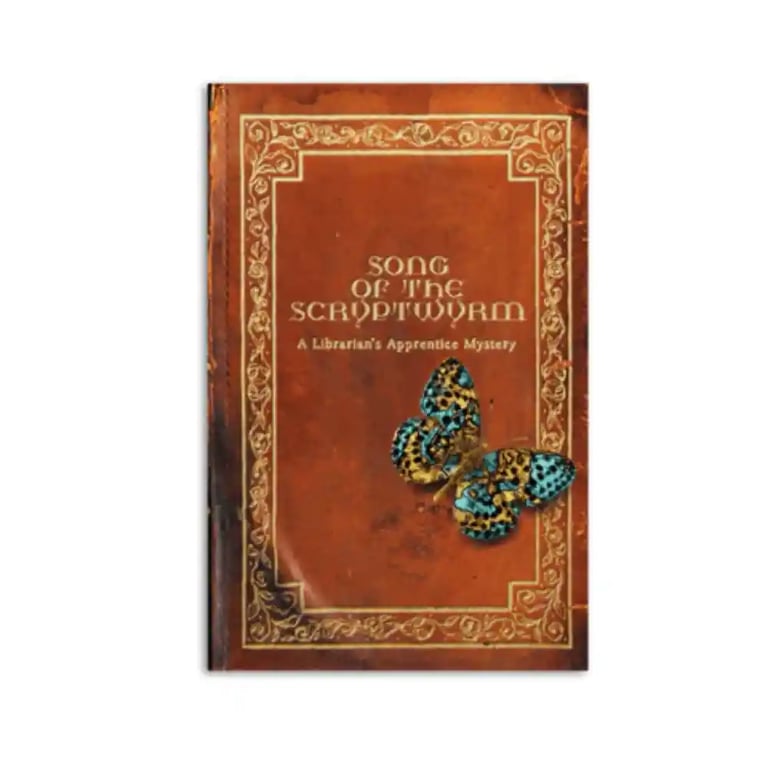
What is Song of the Scryptwyrm?
Song of the Scryptwyrm is a solo journaling game by designer Dan Bronson-Lowe, released in 2025 under the Almost Bedtime Theater banner. That studio is small and family-run, and previously made a podcast about role-playing games for families. You play an apprentice librarian in the Great Library, an infinite and ever-changing library where something has been stolen from the mind of a mysterious creature: the Scryptwyrm. It is up to you to find out what happened.
The game stands on its own, but you can also play it as a sequel to Bronson-Lowe’s earlier game The Librarian’s Apprentice. That game has a good reputation in the solo journaling scene. It does not matter, though: if you have never played the first one, you miss nothing essential. In 2026 Song of the Scryptwyrm was nominated for an ENNIE Award in the Best Solo Game category, a well-known prize in the role-playing world. Nominated, but it did not win: gold went to SPINE by Asa Donald. But it clearly has something good about it.
How do you play Song of the Scryptwyrm?
The core is surprisingly simple. You choose a lead or a place to investigate and decide which approach to use. Then you roll a handful of six-sided dice, the number depending on the skill you are using. Next, you look only at the highest roll. That tells you whether you find a clue or get into trouble. That is the entire resolution system, and it runs smoothly enough not to pull you out of the story.
Besides your own training, you have two other tools. There is a Familiar, a companion you create yourself and can choose as the approach for a test. And there is the Collection: a small, personal oracle deck from which you draw cards and interpret them according to a reading ritual you invent yourself. That last part is the peculiar heart of the game. You are not handed a fixed table; you decide for yourself how to read the cards and what they mean within your story.
The book teaches you the rules as you play, woven into the opening story rather than in a dry manual up front. It contains 36 suspects and witnesses, plus 18 locations, and generator tables for creating new people and places yourself once you have worked through the fixed supply. How long a session lasts varies a lot: expect anything between half an hour and a few hours, depending on how deeply you dive into the writing.
What works
The best thing about Song of the Scryptwyrm is how little it gets in your way. The dice rule is explained in one sentence, after which your attention can go entirely to the story. Because you only read the highest roll, every throw feels like a small moment of suspense: will I find a clue, or will I run into something? That rhythm keeps a solo session surprisingly lively, even though you are sitting at the table on your own.
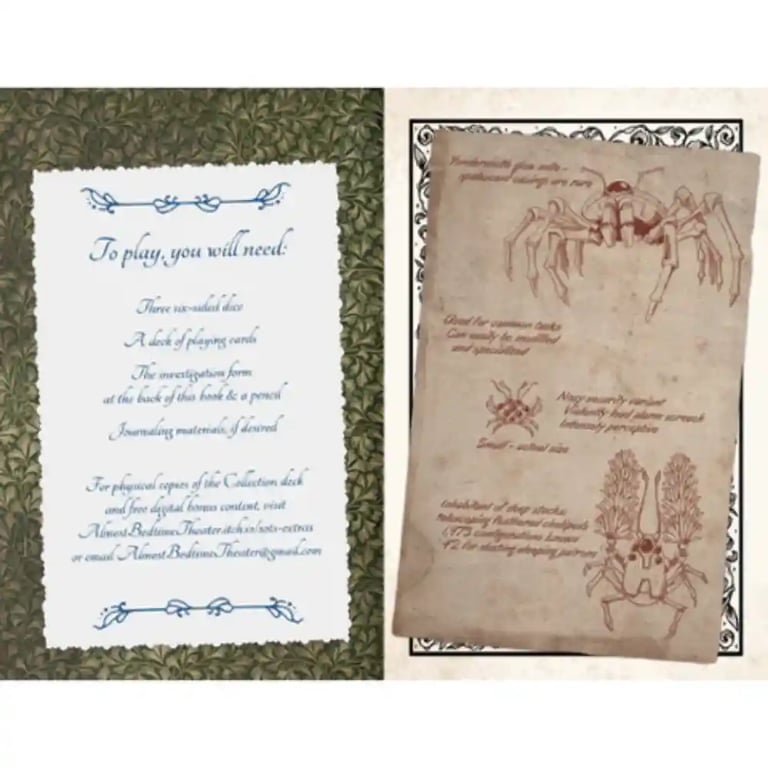
The Collection and the home-made reading ritual give the game something personal that you rarely see done like this. Two players solving the same mystery come out of the story with very different notes and interpretations. Add the generator tables and you have a booklet you can open again and again without it going stale. The zine itself is also made with care: full colour, with documents that look like real letters and forms from the world itself, and even hidden messages between the pages. It was clearly made by someone who loves the medium.
What grates
Note one thing before you order: no dice or cards come with the zine. You need to have, or buy, three six-sided dice and an ordinary deck of cards yourself. For anyone who knows this genre that is nothing unusual, but if you expect to unpack a complete game and start straight away, it is good to know. It is a fair choice that keeps the price low, just not always made clear up front.
The game also asks something of you. That home-made reading ritual and the free writing are exactly what make the game special, but anyone who likes firm guidance may feel a little lost at first. And the game is only available in English. You do not need a gift for languages, but you will be reading and writing in English all evening.
Who is Song of the Scryptwyrm for?
This is a game for people who enjoy sitting alone at the table with a notebook and taking their time, and who love mysteries, atmosphere and making up stories themselves. You should not mind adding a bit of your own structure, because that is exactly what this game is about. It is rated for ages 10 and up, though younger players can join in perfectly well with some help from an adult. A fan of The Librarian’s Apprentice? This feels like a logical next step. Never played solo before, but curious about the genre? Then this is a fine place to start.
The verdict
The critical reception is still thin: one in-depth review and the ENNIE nomination, and honestly there is not much more to say about it. But what is there holds up. For this price you get a polished, atmospheric booklet that carries you off to an infinite library for an evening, provided you are willing to supply the dice, the cards and a bit of imagination yourself. You will find it in the shop at Kapitein Spel. Not yet at home with this kind of game? Our guide to solo journaling games will get you started.
A small booklet that takes you along for a whole evening, as long as you dare to furnish it yourself.